
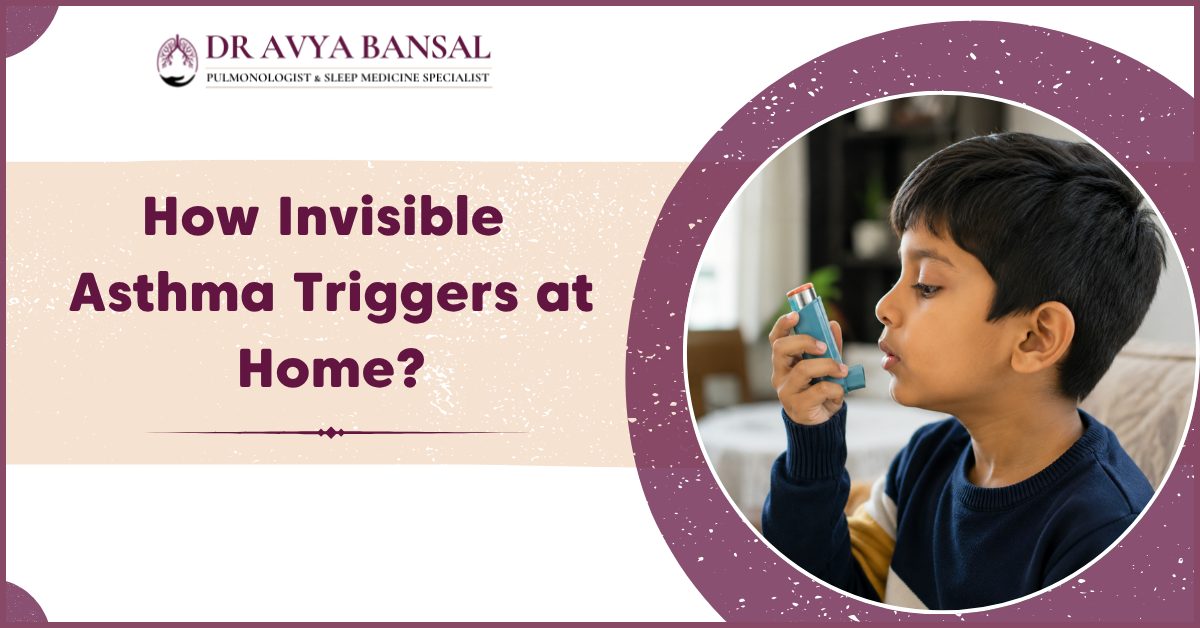
How Do Invisible Triggers at Home Impact Asthma Symptoms?
If you are managing Asthma Treatment at home, understanding hidden triggers in your living space can be a game‑changer. Many people focus on medication or clinic visits but overlook what’s in their daily environment that worsens asthma. Your home should support your breathing, not make it harder.
In this blog, you will learn how everyday items like bedding, cleaning products, and pets can silently affect your lungs. You’ll also discover real ways to reduce these hidden asthma triggers and when it’s essential to consult a specialist like Dr. Avya Bansal to improve your overall asthma care.
How Invisible Triggers Cause Flare‑Ups
Many asthma triggers are unseen yet can directly irritate your airways. These triggers often lurk in places you wouldn’t expect, and repeated exposure can make symptoms chronic rather than occasional. Consulting a Pulmonologist in Mumbai can help identify these hidden triggers and guide you toward effective asthma management.
Dust Mites in Bedding and Furniture
Dust mites are tiny organisms that live in mattresses, pillows, and soft furniture. They feed on dead skin cells and release waste that can trigger your immune system. Even if your room looks clean, dust mite particles float in the air and can make breathing harder while you sleep. Regular washing of bedding, using allergen‑proof covers, and vacuuming with a HEPA filter can reduce their impact.
Mold Growth in Damp Areas
Mold thrives in bathrooms, kitchens, and anywhere moisture collects. Mold spores become airborne and irritate inflamed airways. This irritation often leads to coughing, chest tightness, and worsening symptoms of asthma. Controlling humidity in your home and fixing leaks quickly helps limit mold spores in your breathing space.
Indoor Air Pollution from Cooking and Smoke
Smoke from cooking, incense sticks, and tobacco leaves particles in the air that are small enough to reach deep into your lungs. These microscopic particles can provoke strong reactions, especially in people already sensitive from asthma. Even if pollution outside seems worse, indoor air pollution remains a serious hidden problem.
Cleaning Products and Chemical Fumes
Many cleaning solutions and air fresheners release volatile organic compounds (VOCs) that irritate your respiratory system. Strong disinfectants and sprays can worsen airway inflammation, making asthma harder to control. Choosing fragrance‑free options and avoiding aerosols can minimize this risk.
Pet Dander and Biological Allergens
Pets are beloved family members, but tiny flakes of skin, saliva, and urine particles known as dander can stay in carpets and on furniture. These particles trigger asthma in many people. Grooming pets regularly and keeping them out of sleeping areas can help reduce this exposure.
Simple Actions to Lower Invisible Triggers
Understanding where these hidden triggers hide is only the first step. You also need clear ways to manage them at home.
- Improve Ventilation: Open windows to allow fresh air to circulate. Better airflow decreases moisture that feeds mold and dust build‑up.
- Wash Bedding Weekly: Hot water removes dust mites and allergen buildup. Using allergen‑resistant covers can make a big difference.
- Choose Gentle Cleaning Supplies: Swap strong fragrances for simple soaps or eco‑friendly cleaners with fewer irritants.
- Run an Air Purifier: A good HEPA air purifier continuously filters pollen, dust, and smoke from your home air.
- Monitor Humidity Levels: Keeping humidity below 50% helps stop mold and dust mites from multiplying.
When to See a Specialist
If controlling home triggers isn’t enough to manage symptoms, don’t wait to seek professional guidance. A Pulmonologist in Mumbai can assess both environmental factors and your asthma control. A specialist like Dr. Avya Bansal, who combines clinical expertise with comprehensive asthma care, can personalize your Asthma Treatment plan to fit your needs.
Consulting with an expert helps you understand whether your symptoms are from hidden triggers, medication gaps, or a need for updated care strategies.
FAQs About Invisible Asthma Triggers
Routine control of hidden home triggers can dramatically change your asthma experience. By combining environmental awareness with effective Asthma Treatment and professional guidance when needed, you can keep symptoms more predictable and easier to manage. If you feel your symptoms are worsening despite your efforts, reaching out to a qualified Pulmonologist in Mumbai could be the next right step in taking care of your respiratory health.