
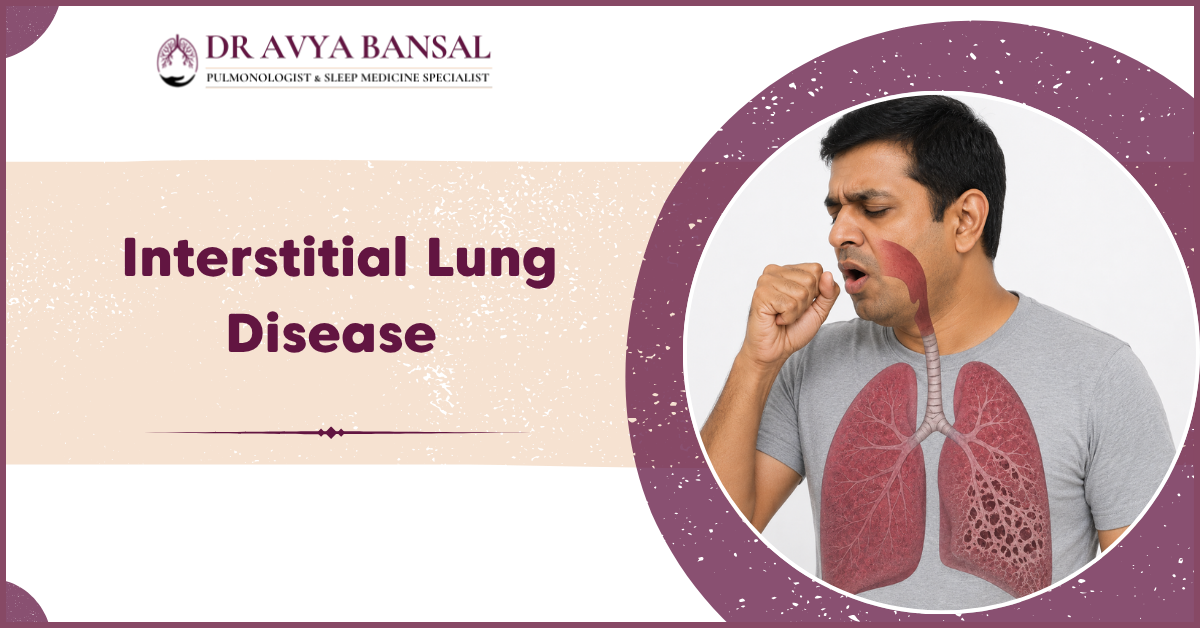
Introduction
Breathing changes often start quietly.
You climb stairs and feel more breathless than before.
A dry cough lingers without clear reason.
Daily activities start to feel heavier than they used to.
These changes may point to a group of conditions known as Interstitial Lung Disease.
This condition affects the lung tissue that supports the air sacs. It reduces how well oxygen moves into your blood. Over time, it can impact daily life in a noticeable way.
In this guide, you will understand what Interstitial Lung Disease means, why it happens, how it develops, and what treatment options exist. You will also learn when to seek a specialist and what to expect during evaluation.
What Interstitial Lung Disease Means
It refers to a group of disorders that cause inflammation or scarring in the lungs.
The lungs contain tiny air sacs called alveoli. These sacs transfer oxygen into your bloodstream. In Interstitial Lung Disease, the tissue around these air sacs becomes thick or stiff. This reduces oxygen flow. Your lungs work harder, but oxygen delivery still drops.
Some people experience slow progression. Others notice faster changes depending on the cause and severity. Doctors treat Lung Disease as a group of related conditions rather than a single disease.
Causes of Interstitial Lung Disease
Several factors can trigger lung damage. In many cases, more than one factor contributes.
1. Long-term environmental exposure
Continuous exposure to harmful particles can damage lung tissue. Common sources include:
- Dust from construction sites
- Metal and silica particles
- Farming-related organic dust
- Asbestos exposure
Damage builds slowly and often goes unnoticed in early stages.
2. Smoking history
Smoking increases inflammation inside the lungs. It also worsens existing lung damage and accelerates scarring in Interstitial Lung Disease. Even after quitting, past exposure can still affect lung health.
3. Autoimmune conditions
In some cases, the immune system attacks healthy lung tissue. Conditions linked with this Lung Disease include:
- Rheumatoid arthritis
- Scleroderma
- Lupus
These conditions often require joint care between specialists.
A skilled Pulmonologist in Mumbai can help coordinate diagnosis when symptoms overlap with other diseases.
4. Medication and treatment effects
Certain drugs used for cancer, heart conditions, or infections can affect lung tissue. Radiation therapy to the chest can also contribute to lung scarring.
5. Unknown causes
Sometimes doctors cannot identify a clear reason. This is called idiopathic Interstitial Lung Disease. It requires careful long-term monitoring.
Symptoms You Should Watch Closely
Symptoms often start mild and slowly increase over time.
Shortness of breath
You may feel breathless while walking, climbing stairs, or doing light housework. This is one of the earliest signs.
Dry, persistent cough
A cough that does not produce mucus and lasts for weeks needs attention. It often worsens over time.
Low energy levels
Reduced oxygen affects energy production in the body. You may feel tired even after rest.
Chest tightness
Some people feel pressure or tightness in the chest during activity.
Changes in fingers
In advanced cases, fingertips may become rounder or wider. This change develops slowly.
At this stage, consulting a Pulmonologist in Mumbai becomes important for early intervention and testing.
How Doctors Diagnose Interstitial Lung Disease
Diagnosis involves multiple steps. No single test confirms it.
1. Medical history review
Doctors ask about:
- Work exposure
- Smoking history
- Family history
- Existing autoimmune conditions
2. Physical examination
A doctor listens for crackling sounds in the lungs. These sounds often suggest lung tissue changes.
3. Imaging tests
A high-resolution CT scan gives detailed lung images. It helps detect early scarring. A chest X-ray may show general abnormalities but is less precise.
4. Lung function tests
These tests measure:
- Lung capacity
- Airflow efficiency
- Oxygen transfer ability
5. Blood tests
Blood tests help detect autoimmune conditions linked to it.
6. Specialist consultation
A Pulmonologist in Mumbai may recommend advanced testing or referral if diagnosis remains unclear.
In complex cases, specialists like Dr. Avya Bansal are often consulted for detailed respiratory evaluation and treatment planning.
Treatment Options for Interstitial Lung Disease
Treatment depends on the cause, stage, and progression speed.
1. Medications
Doctors may prescribe:
- Anti-inflammatory drugs
- Anti-fibrotic medications
- Immune system regulators
These medicines aim to slow disease progression.
2. Oxygen support
If oxygen levels drop, supplemental oxygen may be required during activity or rest.
3. Pulmonary rehabilitation
This includes:
- Breathing exercises
- Guided physical activity
- Energy conservation techniques
It helps improve daily functioning.
4. Lifestyle changes
You can support lung health by:
- Avoiding smoking completely
- Reducing dust exposure
- Staying physically active within limits
- Following a balanced diet
5. Advanced treatment
In severe cases, lung transplant may be considered after full evaluation.
Living With Interstitial Lung Disease
Living with Lung Disease requires regular monitoring. Symptoms can change slowly or suddenly. Tracking breathlessness helps doctors adjust treatment early.
Regular follow-ups with a in Mumbai help monitor lung function and disease progression. Patients often benefit from structured care plans designed by specialists, especially when the condition becomes complex or long-standing.
When You Should Seek Medical Help
You should consider medical evaluation if you notice:
- Breathlessness during simple activities
- A cough lasting more than a few weeks
- Reduced stamina without clear reason
- Chest discomfort during movement
Early evaluation improves management outcomes.
FAQs
Conclusion
This Lung Disease affects how oxygen moves through the lungs. It develops slowly in many cases, but early signs like breathlessness and dry cough should not be ignored. Diagnosis requires detailed testing and expert evaluation. Treatment focuses on slowing progression and supporting lung function through medication, oxygen therapy, and lifestyle changes.
If symptoms persist, consulting a Pulmonologist in Mumbai can help you get clarity and start timely care. In complex cases, specialists such as Dr. Avya Bansal may guide advanced management and long-term planning. Early attention to breathing changes makes a real difference in how the condition progresses over time.