

Chest Congestion: Causes, Home Remedies, Symptoms and When to Seek Medical Help
Introduction
Have you ever felt heaviness in your chest with mucus that does not seem to clear? Chest congestion occurs when excess mucus builds up in the airways, making breathing and coughing uncomfortable. It is commonly seen with colds, respiratory infections, allergies, and other lung-related conditions.
While mild chest congestion may improve with simple home care, persistent symptoms can sometimes indicate an underlying respiratory problem. Understanding the causes, symptoms, home remedies, and warning signs can help you take the right steps at the right time.
This guide explains what causes chest congestion, how you can manage it at home, when you should consult a doctor, and how specialists diagnose and treat ongoing breathing problems.
What Is Chest Congestion?
Chest congestion refers to the buildup of mucus or fluid in the breathing passages and lungs. Your body naturally produces mucus to trap dust, germs, and irritants. When your body produces too much mucus, it can become difficult to clear.
People with chest congestion often experience:
- A heavy feeling in the chest
- Cough with mucus or phlegm
- Difficulty taking deep breaths
- Wheezing or noisy breathing
- Throat irritation
- Feeling tired due to repeated coughing
Many people confuse chest congestion with chest pain. Chest congestion is usually linked to mucus buildup and airway irritation, while chest pain can have several causes and may need medical evaluation.
What Causes Chest Congestion?
Chest congestion can happen due to several conditions. Identifying the cause helps in choosing the right treatment.
Respiratory Infections
Common infections such as cold and flu can increase mucus production. The body produces extra mucus to remove viruses and protect the respiratory system.
Symptoms may include:
- Runny nose
- Cough
- Mild fever
- Body aches
- Chest discomfort
Most viral infections improve with rest, fluids, and supportive care.
Bronchitis
Bronchitis occurs when the bronchial tubes, which carry air to and from the lungs, become inflamed. It often causes a persistent cough with mucus production. Acute bronchitis usually develops after a viral infection, while chronic bronchitis may be linked to long-term airway irritation.
Asthma and Allergies
Asthma can cause airway narrowing, mucus buildup, chest tightness, and breathing difficulty. Allergies caused by dust, pollen, or other triggers can also increase mucus production. People with asthma may notice that symptoms become worse after exposure to certain environments.
Pollution and Irritants
Smoke, air pollution, chemical fumes, and cigarette smoke can irritate the lungs. Continuous exposure can increase mucus production and worsen breathing symptoms.
What Are the Symptoms of Chest Congestion?
Chest congestion symptoms can vary depending on the underlying cause. Common symptoms include:
Cough With Phlegm
A productive cough helps remove mucus from the airways. The colour and amount of mucus may change during an infection.
Chest Heaviness
Many people describe chest congestion as a feeling of pressure or fullness in the chest.
Shortness of Breath
Mucus blockage and airway inflammation can make breathing more difficult.
Wheezing
A whistling sound while breathing may indicate narrowed airways and should be evaluated if it continues.
Fatigue
Frequent coughing and disturbed sleep can leave you feeling tired during the day.
Home Remedies to Relieve Chest Congestion
Mild cases of chest congestion can often improve with supportive care. These measures may help reduce discomfort.
Stay Hydrated
Drinking enough fluids helps keep mucus thinner and easier to clear. Helpful options include:
- Warm water
- Clear soups
- Herbal drinks
- Warm lemon water
Proper hydration supports the body’s natural process of clearing mucus.
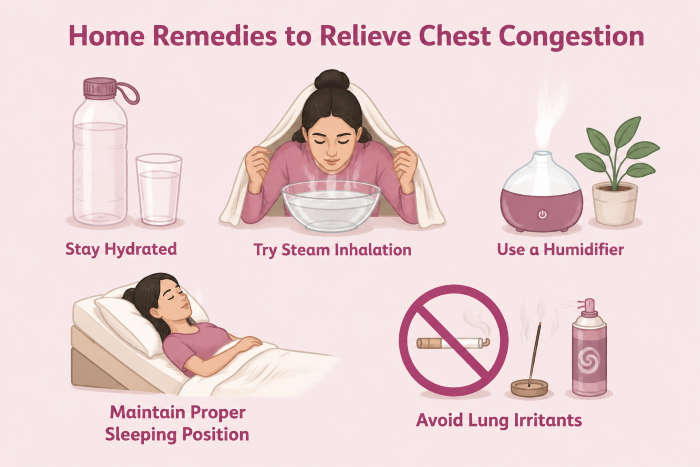
Try Steam Inhalation
Steam inhalation may provide temporary relief by adding moisture to the airways. It can help loosen thick mucus and make coughing more comfortable. Avoid very hot steam to prevent burns.
Use a Humidifier
Dry air can irritate the throat and worsen coughing. A clean humidifier can add moisture to the room and reduce dryness. Make sure the device is cleaned regularly to avoid bacterial or mold growth.
Maintain Proper Sleeping Position
Chest congestion can feel worse when lying flat. Keeping your head slightly elevated while sleeping may reduce coughing episodes at night.
Avoid Lung Irritants
Stay away from:
- Cigarette smoke
- Strong perfumes
- Dust
- Chemical fumes
Reducing exposure can help prevent further airway irritation.
Can the Colour of Mucus Tell You the Cause?
Many people worry when they notice yellow or green mucus. Mucus colour alone does not always indicate a bacterial infection.
Clear Mucus
Clear mucus is commonly seen with allergies, mild irritation, or viral infections.
Yellow or Green Mucus
This can occur when your immune system responds to an infection. It does not always mean antibiotics are needed.
Blood in Mucus
Coughing blood should always be evaluated by a healthcare professional, especially if it continues.
When Should You See a Doctor for Chest Congestion?
Most mild cases improve with time. You should consult a doctor if symptoms continue, worsen, or affect your daily activities.
Seek medical advice if you experience:
- Persistent Cough: A cough lasting more than three weeks may require evaluation to identify the cause.
- Breathing Difficulty: Shortness of breath, rapid breathing, or difficulty performing normal activities should not be ignored.
- High Fever: Fever with worsening cough, chest discomfort, or weakness may require medical assessment.
- Chest Pain: Chest pain with breathing difficulty needs proper evaluation to rule out serious conditions.
- Repeated Chest Congestion: Frequent episodes may indicate asthma, allergies, chronic airway problems, or another underlying condition.
A consultation with a respiratory specialist can help identify the reason behind recurring symptoms. If you are looking for a Pulmonologist in Mumbai, a specialist can assess your symptoms and recommend appropriate investigations and treatment.
How Do Doctors Diagnose Chest Congestion?
A doctor begins with a detailed discussion about your symptoms, medical history, and lifestyle factors.
The evaluation may include:
- Physical Examination: The doctor listens to your lungs using a stethoscope to check for abnormal sounds such as wheezing or crackling.
- Oxygen Level Assessment: A pulse oximeter may be used to check oxygen levels in your blood.
- Chest Imaging: A chest X-ray may be recommended when doctors need to evaluate infections or other lung conditions.
- Lung Function Tests: Breathing tests can help identify conditions such as asthma or airway obstruction.
- Bronchoscopy: In some cases, doctors may recommend Bronchoscopy. This procedure uses a thin flexible camera to examine the airways and identify problems such as blockages, infections, or unusual changes inside the lungs.
Treatment Options for Chest Congestion
Treatment depends on the underlying cause. Doctors may recommend:
- Medicines to reduce mucus thickness
- Inhalers for asthma-related symptoms
- Allergy medications
- Treatment for infections when required
- Breathing exercises and lifestyle changes
Avoid taking antibiotics without medical advice. Many cases of chest congestion are caused by viruses, where antibiotics may not provide benefit.
A respiratory specialist can create a treatment plan based on your symptoms and test results. Dr. Avya Bansal focuses on diagnosing and managing respiratory conditions with a patient-centred approach. Consulting an experienced respiratory specialist can help you understand the cause of repeated chest congestion and receive suitable care.
FAQs About Chest Congestion
Conclusion
Chest congestion is often manageable with simple measures such as staying hydrated, avoiding irritants, and getting proper rest. Understanding your symptoms helps you identify when home care is enough and when professional advice is needed.
Persistent cough, breathing difficulty, chest pain, or repeated episodes of congestion should not be ignored. Consulting a respiratory specialist can help find the underlying cause and provide the right treatment approach. With timely evaluation and proper care, most respiratory problems can be managed effectively.