
Bronchial Asthma: Common Triggers and Management
Introduction
You may feel normal in the morning and struggle to breathe by night.
That shift often confuses many people living with asthma.
Bronchial asthma affects the airways and makes breathing difficult when they become sensitive to certain triggers. In cities like Mumbai, rising pollution and lifestyle factors increase cases every year. Many patients search for a Pulmonologist in Mumbai when symptoms start interfering with daily life.
This blog explains how asthma develops, what triggers it, and how you can manage it in real life. You will also understand when Asthma Treatment in Mumbai becomes necessary and how expert care supports long-term control.
Why your breathing changes without warning
Asthma does not stay constant. It behaves differently on different days.
Your airways react to triggers like dust, smoke, infections, or weather changes. This reaction narrows the airways and makes breathing harder.
Many patients ignore early signs like mild cough or chest tightness. Over time, these small signals turn into frequent attacks.
In Mumbai, humidity and pollution often worsen symptoms. This is one reason people consult a Pulmonologist in Mumbai early instead of waiting for severe episodes.
A specialist like Dr. Avya Bansal focuses on identifying these patterns early and preventing long-term airway damage.
Common asthma triggers you may be missing
Asthma triggers are not always obvious. Some work silently in your daily environment.
Dust and indoor air
Dust mites live in mattresses, curtains, and sofas. You breathe them in every night. This is why symptoms often feel worse in the morning.
Air pollution
Traffic pollution and industrial smoke in Mumbai irritate sensitive airways. Many patients notice they need Asthma Treatment in Mumbai more frequently during high pollution days.
Weather shifts
Cold air, sudden humidity changes, and monsoon conditions can tighten airways. Even a short exposure can trigger coughing or wheezing.
Infections
A simple cold or viral fever can inflame your lungs. This makes breathing harder even after the infection improves.
Stress and emotions
Stress changes your breathing pattern. Rapid breathing can worsen airway sensitivity.
Understanding these triggers helps you reduce attacks instead of reacting after symptoms appear.
How asthma actually affects your lungs
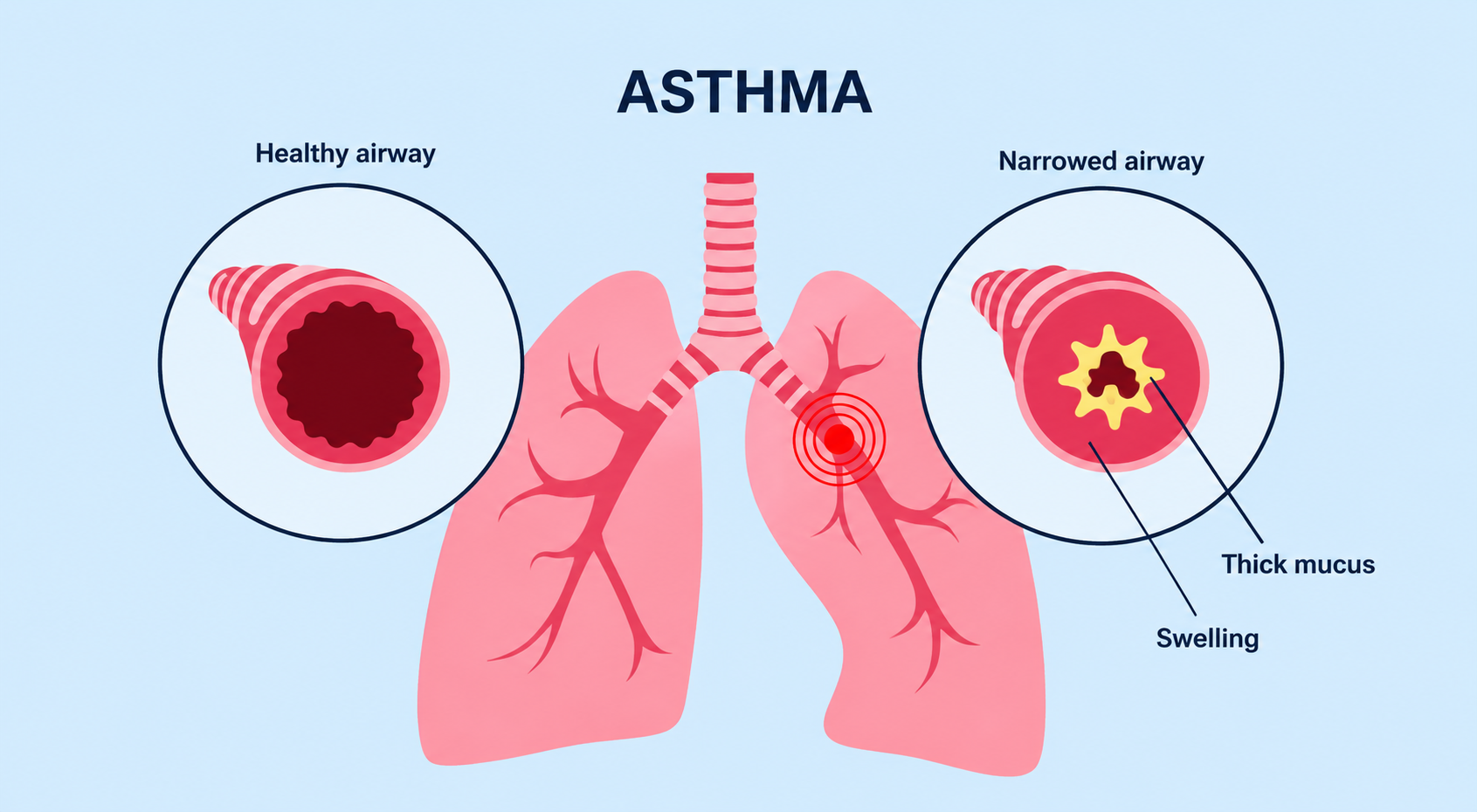
Inside your lungs, airways act like flexible tubes. In asthma, these tubes become sensitive.
When exposed to triggers, three things happen:
- Airway walls swell
- Muscles around airways tighten
- Mucus increases
This combination reduces airflow. That is why you feel tightness, coughing, or wheezing.
Patients often describe it as “air not going in fully.” This is a key reason many visit a Pulmonologist in Mumbai for proper diagnosis instead of self-treatment.
Early Asthma Treatment in Mumbai helps reverse inflammation before it becomes persistent.
Symptoms you should not ignore
Asthma symptoms often start mildly. You may think it is seasonal or temporary.
Watch for:
- Repeated cough, especially at night
- Breathlessness during light activity
- Wheezing sound while breathing
- Chest tightness after exposure to dust or smoke
- Difficulty sleeping due to breathing discomfort
If these symptoms repeat, your airways are already sensitive. At this stage, a Pulmonologist in Mumbai can help identify the severity and start the right plan.
Diagnosis and clinical evaluation
Asthma is not diagnosed by symptoms alone. Doctors use lung function tests to confirm it.
Common tests include:
- Spirometry to measure airflow
- Peak flow monitoring at home
- Allergy testing to identify triggers
A structured diagnosis helps decide whether you need regular Asthma Treatment in Mumbai or occasional symptom control.
Management approach that actually works
Asthma control depends on consistency, not just medication.
1. Inhaler use
Reliever inhalers provide quick relief during attacks.
Controller inhalers reduce long-term inflammation.
Many patients stop controller inhalers when they feel better. This leads to repeated flare-ups. A Pulmonologist in Mumbai always stresses continuous use when needed.
2. Trigger control
You cannot avoid all triggers, but you can reduce exposure.
- Keep bedding clean
- Avoid smoke exposure
- Use masks in polluted areas
3. Breathing control
Slow breathing techniques reduce panic during attacks.
Regular practice improves lung capacity over time.
4. Monitoring symptoms
Track how often you need inhalers. If usage increases, your Asthma Treatment in Mumbai plan may need adjustment.
5. Lifestyle support
Light exercise like walking improves lung strength. Avoid extreme cold environments during workouts.
When should you see a specialist
You should not wait for severe attacks.
Consult a Pulmonologist in Mumbai if:
- Symptoms occur more than twice a week
- You wake up at night due to breathlessness
- You rely on reliever inhalers frequently
- Normal activities feel tiring
Early consultation reduces long-term complications. Many patients delay care and only seek Asthma Treatment in Mumbai after repeated emergencies.
Role of expert care in long-term control
Asthma management improves when guided by a specialist.
A trained Pulmonologist in Mumbai evaluates:
- Trigger patterns
- Medication response
- Lung function trends
Specialists like Dr. Avya Bansal focus on personalized plans instead of one-size-fits-all treatment. This approach helps patients reduce flare-ups and improve daily breathing comfort.
Regular follow-ups ensure your Asthma Treatment in Mumbai stays effective as your condition changes over time.
FAQs
Conclusion
Bronchial asthma needs attention, not delay. Your symptoms often follow a pattern linked to triggers you encounter daily.
With the right care, you can control breathing difficulties and reduce attacks. Early consultation with a Pulmonologist in Mumbai helps identify risks before they worsen.
Structured Asthma Treatment in Mumbai focuses on long-term stability, not just temporary relief.
If symptoms continue or interfere with daily life, expert guidance becomes important. With consistent care and awareness, you can manage asthma and maintain better breathing control in everyday life.